IDEA
Federal special education principles guide evaluation, eligibility, individualized programming, services, and educational access.
The Adaptive University provides informed educational advocacy and ARD/IEP support grounded in clinical expertise, meaningful educational data, collaborative problem-solving, and a strong understanding of the special education legal framework.
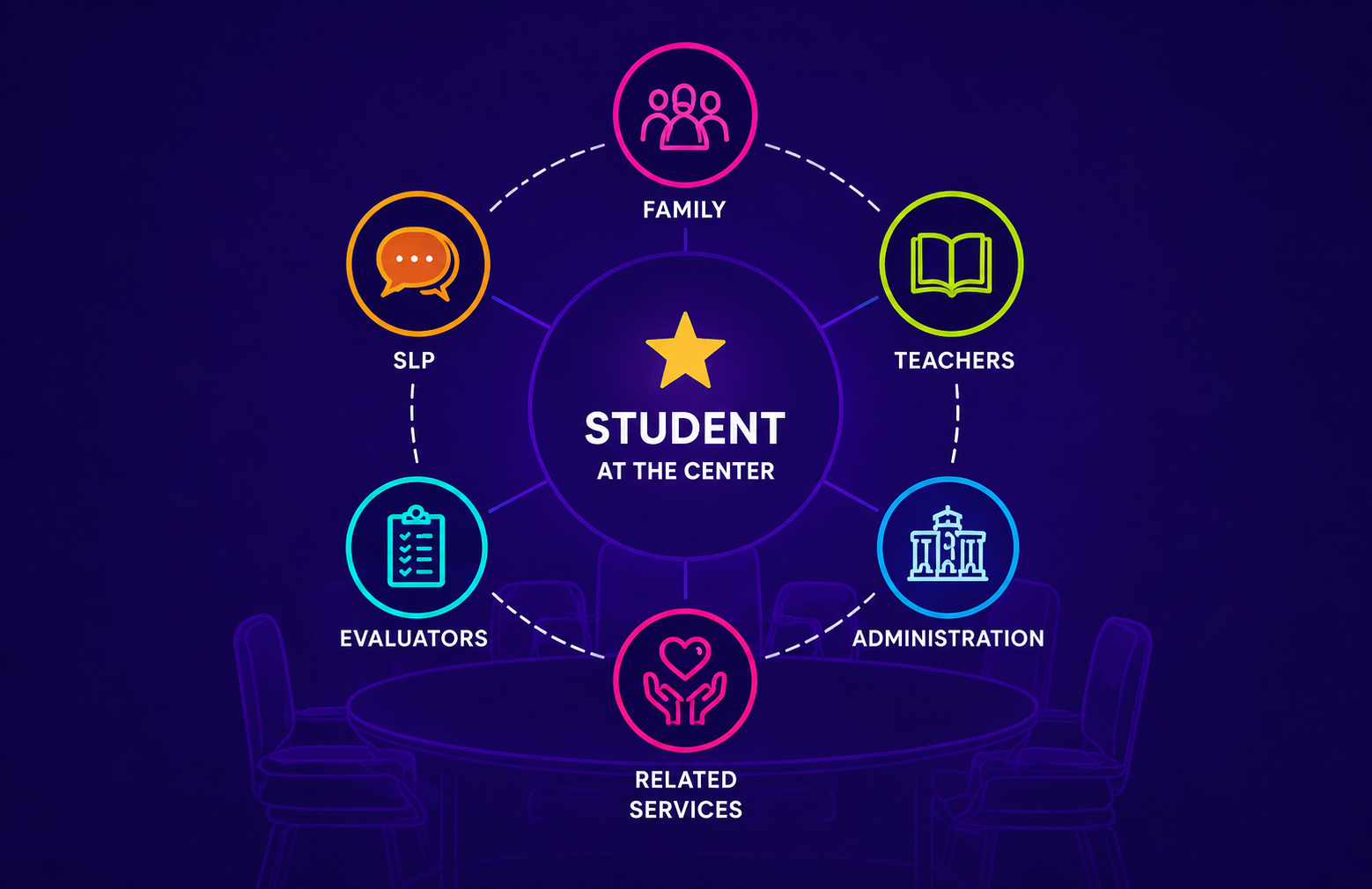
Federal special education principles guide evaluation, eligibility, individualized programming, services, and educational access.
Eligible students with disabilities are entitled to a Free Appropriate Public Education under IDEA.
Placement and services should support education with nondisabled peers to the maximum extent appropriate for the individual student.
Thoughtful special education practice includes attention to participation, process, documentation, notices, safeguards, and required timelines.
Strong decisions connect meaningful evaluation and progress data to the student’s educational access, participation, needs, and outcomes.
Effective advocacy is not about making ARD meetings adversarial. It is about making sure teams have the information, perspective, and support needed to make thoughtful, individualized decisions for students.
Begin with the whole student—not a single score, diagnosis, label, service category, or predetermined program. Consider communication, access, participation, educational performance, and functional needs.
Review meaningful evaluation information, progress data, classroom performance, team input, and educational impact so recommendations remain connected to what the evidence actually shows.
Thoughtful questions help teams move beyond assumptions and toward individualized, student-centered conversations about eligibility, goals, services, supports, access, and progress.
The goal is a clear, collaborative decision-making process in which recommendations are individualized, documented, educationally relevant, and connected to student need.
Complex student needs often require more than reviewing a document during a meeting. The Adaptive University can support schools and education teams before, during, and after ARD/IEP decision-making through consultation, data review, clinical insight, and collaborative problem-solving.
Strong teams do not have to agree immediately. They do need space to examine different perspectives, return to meaningful data, ask questions, explain recommendations, and remain centered on the student.
The goal is not to “win” an ARD meeting. The goal is to strengthen the quality of the conversation so the team can make appropriate, individualized, and sustainable educational decisions.
Move beyond competing positions toward productive multidisciplinary conversation.
Connect concerns to meaningful information that helps the team understand student need.
Use differing perspectives as an opportunity to identify stronger solutions.
Keep the focus on whether supports translate into meaningful educational access and participation.
Students deserve thoughtful decisions informed by meaningful data, grounded in the educational framework, and driven by what they need to access, participate, communicate, learn, and succeed.
The Adaptive University provides educational consultation, advocacy support, clinical consultation, and special education-focused professional services. These services do not constitute legal representation or legal advice. School districts and organizations remain responsible for their own legal and compliance determinations.
Looking for ARD meeting help, an IEP advocate or support understanding evaluation information? Start by describing the meeting and the kind of educational support you need. AU can discuss preparation, records review, speech-language and AAC questions, and consultation with the team.
Organize the questions you want addressed, identify the records available and clarify the student’s communication and participation needs.
Discuss findings, goals and service considerations, then identify the agreed next steps and questions that need follow-up.
Family inquiries and district consultation involve different roles. AU will confirm the requested role, scope, availability and any existing relationship with the school before accepting an assignment. Educational advocacy support does not include legal representation.
Discuss ARD or IEP support · Explore speech-language evaluations · Explore AAC support